
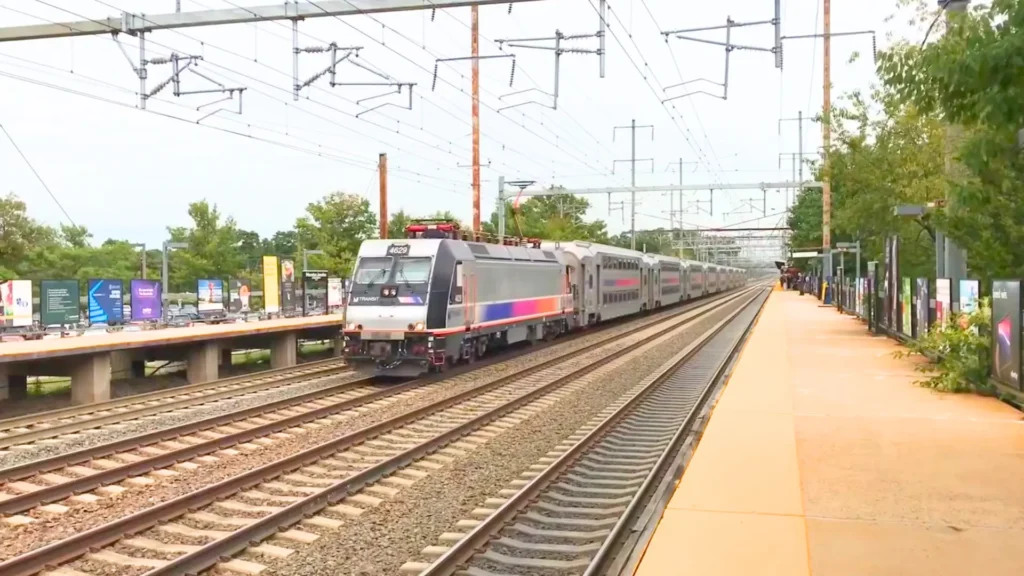
If you are moving from New York City to the New Jersey suburbs, you have one non-negotiable requirement: the NJ Transit Midtown Direct. You want a one-seat ride to Manhattan.
You do not want to transfer at Newark Penn Station. You do not want to stand on a freezing platform waiting for a connection. You want to get on a train, sit down, and get off inside New York Penn Station.
That service is called Midtown Direct.
It completely changed the real estate market in Essex, Morris, and Union counties. Towns that used to be considered “too far” suddenly became prime commuter hubs. The 1996 opening of the Kearny Connection allowed trains to bypass Hoboken and slide directly under the Hudson River.
If you are looking at a map of NJ towns near NYC, the Midtown Direct line is the dividing line between a good commute and a terrible one.
Here is exactly how it works, every stop on the line, the real estate reality of each town, and what it costs.
Table of Contents
ToggleWhat is the NJ Transit Midtown Direct?
For decades, NJ Transit trains from the western suburbs ran into Hoboken Terminal. If your office was in Midtown Manhattan, you had to get off the train, walk into the terminal, and take the PATH train or a ferry across the river. It added 30 minutes to your commute.
Midtown Direct changed the math.
NJ Transit built a track connection in Kearny that allows trains from the Morris & Essex lines to merge onto the Northeast Corridor tracks. From there, they slide directly into the tunnels under the Hudson River.
You board in a suburb like Summit or Maplewood and step off inside New York Penn Station at 7th Avenue and 32nd Street. It is the fastest, most reliable way to commute from New Jersey.
The Morris & Essex Line Stops
The majority of Midtown Direct service runs on the Morris & Essex (M&E) line. The line splits into two branches after Summit.
The Morristown Line (West of Summit)
This is the main artery. It serves a massive chunk of commuters. The towns range from historic villages to sprawling suburban hubs.
Hackettstown
This is the end of the line. It sits in Warren County. The commute to New York is long, roughly 1 hour and 45 minutes. You are not moving here for the commute. You are moving here for the mountains, the lower property taxes (compared to Essex County), and the space.
Mount Olive
The train stops at Mount Olive and Netcong. These towns are rural and hilly. The commute is about 1 hour and 35 minutes. It is a tough daily grind, but you get a lot of house for your money.
Lake Hopatcong
This is a summer resort town that became a year-round suburb. The train station is actually in Landing. The commute is about 1 hour and 25 minutes. You get lake living, but you pay for it with a long train ride.
Denville
Denville is known as the “Hub of Morris County.” It has a walkable downtown and a strong community feel. The commute is about 1 hour and 10 minutes. It is a great option for families who want a bit more space without moving to the middle of nowhere.
Morris Plains
This is a small, quiet town right next to Morristown. The commute is about 1 hour and 5 minutes. The housing stock is mostly older colonials and capes.
Morristown
This is the commercial hub of Morris County. It has a massive, vibrant downtown centered around the Morristown Green. You have fantastic restaurants, bars, and a historic theater. The commute is about 1 hour to 65 minutes. It is popular with young professionals and families who want an urban feel without living in the city.
Convent Station
This stop serves the College of Saint Elizabeth and the surrounding affluent neighborhoods. It is a quiet, leafy area. The commute is about 1 hour.
Madison
Madison is known as “The Rose City.” It has a beautiful, walkable downtown with upscale shops and restaurants. The commute is about 55 to 60 minutes. The real estate is expensive, but the town is immaculate.
Chatham
Chatham is heavily family-focused. The schools are excellent, and the downtown is small but functional. The commute is about 50 to 55 minutes. You pay a premium for the schools. If you want to understand the tax burden, read our guide on moving from NYC to NJ property taxes.
Summit
This is the major hub. It is the first stop where the Gladstone branch merges with the Morristown line. Summit has a gorgeous, upscale downtown and top-tier schools. The commute is about 45 to 50 minutes. It is one of the most desirable towns on the line.
Short Hills
Home to the massive Mall at Short Hills. The housing here is massive and incredibly expensive. The commute is about 40 to 45 minutes.
Millburn
Millburn shares the school district with Short Hills. It has a charming downtown with the Paper Mill Playhouse. The commute is about 40 to 45 minutes.
Maplewood
Maplewood is a classic commuter town. It has a historic village center right next to the train station. The commute is about 35 to 40 minutes. It is slightly more affordable than Millburn. If you are deciding between Essex County towns, read our full comparison of Is Maplewood NJ a Good Place to Live?.
South Orange
South Orange shares the train station vibe and school district with Maplewood. The commute is about 30 to 35 minutes. It is anchored by Seton Hall University.
Orange
Orange is a more urban, diverse city. The commute is about 30 minutes. The real estate is significantly cheaper than Maplewood or South Orange, but the schools are not as highly rated.
Highland Avenue
This is a small station serving the Orange and East Orange border.
Mountain Station
Another small residential stop in South Orange.
Bloomfield
Bloomfield is a dense suburb. The commute is about 30 minutes. It is known for its diverse population and great food scene.
Glen Ridge
Glen Ridge is an island of affluence surrounded by Bloomfield and Montclair. It has top-rated schools and beautiful historic homes. The commute is about 30 minutes.
Bay Street (Montclair)
This is the first of four stops in Montclair. The commute is about 35 minutes.
Walnut Street (Montclair)
This sits closer to the center of town. The commute is about 35 minutes.
The Gladstone Branch
The Gladstone branch winds through some of the wealthiest zip codes in the state. The commute is beautiful, but it is slower. The train makes more stops.
Gladstone
The end of the line. It is deep in horse country. The commute is about 1 hour and 15 minutes.
Peapack
Peapack is tiny. It is mostly large estates and horse farms.
Far Hills
Home to the Far Hills Race Meeting (steeplechase). The commute is about 1 hour and 10 minutes.
Bernardsville
Bernardsville has a cute downtown and massive historic homes. The commute is about 1 hour and 5 minutes.
Basking Ridge
Basking Ridge is famous for its massive, historic oak tree. It is a sprawling, affluent town. The commute is about 1 hour.
Lyons
A small stop near a VA hospital.
Millington
A tiny, leafy stop.
Stirling
Another small, quiet stop.
Gillette
Gillette is a small village.
Berkeley Heights
Berkeley Heights has a nice downtown and good schools. The commute is about 50 to 55 minutes.
New Providence
New Providence is a small, family-friendly town. The commute is about 50 minutes.
Murray Hill
This stop serves the corporate campus and surrounding neighborhoods.
Summit
Here, the Gladstone branch merges with the Morristown line and heads into New York.
The Montclair-Boonton Line
The Montclair-Boonton line offers Midtown Direct service, but the routing is complicated.
Not all trains go directly to New York. Some trains run to Hoboken, forcing you to transfer to the PATH. You must check the schedule to find the trains labeled “New York.”
Montclair State University
The western terminus for some trains. The commute is about 45 minutes.
Upper Montclair
This is a beautiful, affluent section of Montclair with its own walkable downtown on Valley Road. The commute is about 40 to 45 minutes.
Watchung Avenue
This stop serves the northern end of town and sits close to the Montclair Art Museum.
Walnut Street
This stop serves the southern end of Montclair and the border with Orange. It provides easy access to the lower end of Bloomfield Avenue.
Bay Street
This is the main station for downtown Montclair. It sits right off Bloomfield Avenue, making it the best stop if you want to walk to the Wellmont Theater or grab dinner in the center of town. The commute is about 35 to 40 minutes.
Which Towns Have the Best Commute?
Not all Midtown Direct stops are created equal. The further west you go, the longer the ride.
Summit: This is the sweet spot. It is the first major hub where the Gladstone and Morristown lines merge. Trains are frequent, and the ride to Penn Station is roughly 45 minutes. It is expensive, but the commute is excellent.
Maplewood and South Orange: These two towns share a train line and a school district. The Midtown Direct ride to Penn Station is about 35 to 40 minutes. It is one of the fastest commutes in Essex County.
Montclair: Montclair has four separate train stations. The commute is roughly 35 to 45 minutes depending on which station you use. It is a fantastic option if you want a walkable downtown.
Morristown: This is the commercial hub of Morris County. The ride to Penn Station takes about 60 to 65 minutes. You get a vibrant downtown with great restaurants, but you pay for it with a longer commute.
How Much Does It Cost?
NJ Transit uses a zone-based fare system. The further you travel, the more you pay.
For a monthly pass from Summit or Maplewood (Zone 11), you are looking at roughly $340 to $400 per month.
If you commute from further out, like Morristown or Denville, the monthly pass pushes closer to $450 to $500.
You can check the exact current fares and buy tickets on the NJ Transit website. They also offer a mobile app where you can buy tickets instantly, which saves you from waiting in line at the station kiosks.
Parking at the Stations
This is the biggest headache for suburban commuters.
Most of these towns have commuter lots, but they are not free. You have to buy a parking permit from the town, and the waitlists can be years long.
In towns like South Orange or Maplewood, if you do not live within walking distance of the station, you might have to park on a side street (if allowed) and walk a few blocks. Before you sign a lease or buy a house, check the town’s parking authority website to see the current waitlist for a commuter permit.
Some towns, like Summit, have parking decks that are easier to access, but they cost more.
The Kearny Connection Problem (The Summer Schedule)
If you are commuting in the summer of 2026, you need to pay attention to the news.
Because of a massive infrastructure project (the Portal North Bridge replacement), NJ Transit has been forced to alter the Midtown Direct schedule during the summer months. Some trains are being diverted back to Hoboken, forcing riders to take the PATH train into the city.
Always check the NJ Transit alerts page before you travel. The schedule you see in January might not be the schedule in July.
The Commuter Reality: Delays and Etiquette
Riding the Midtown Direct every day is a lifestyle. You will spend roughly 400 hours a year on that train. Here is what you need to know.
The Quiet Commute Car
NJ Transit designates the last car on most multi-level trains as the “Quiet Commute” car. You are not allowed to make phone calls or have loud conversations. If you are a morning person who wants to chat, sit somewhere else. If you want to sleep or work, sit here.
The Seat Hogs
You will see people put their backpacks on the empty seat next to them. If the train is full, you have every right to ask them to move it.
The Delays
The Portal North Bridge project will cause delays. The aging infrastructure on the Northeast Corridor causes delays. Amtrak owns the tracks, and they prioritize their own trains. You need to build a buffer into your commute. Do not schedule a 9:00 AM meeting if your train is supposed to arrive at 8:50 AM.
The Summer Diversions
During the summer, NJ Transit often diverts Midtown Direct trains to Hoboken for maintenance. You will have to take the PATH from Hoboken to 33rd Street or the World Trade Center. It is annoying, but you have to plan for it. If you live in Hoboken or Jersey City, you deal with this daily. Read our breakdown of Hoboken vs. Jersey City to see how the PATH compares to Midtown Direct.
The Real Estate Premium
Living on the Midtown Direct line is expensive. The towns with the shortest commutes command the highest home prices.
A home in South Orange or Maplewood will cost you roughly $700,000 to $1.2 million. A similar home in Summit or Short Hills will cost $1.2 million to $2.5 million.
If you move further out to Denville or Mount Olive, you can find homes in the $500,000 to $800,000 range. You trade a longer commute for a larger house and lower property taxes.
You have to run the math. Is the extra hour of commuting worth the extra bedroom? That is a question only you can answer.
Frequently Asked Questions
What is the Midtown Direct on NJ Transit?
It is a train service that provides a one-seat ride from the New Jersey suburbs directly into New York Penn Station, bypassing Hoboken Terminal.
Which NJ Transit line is the Midtown Direct?
It operates primarily on the Morris & Essex line (both the Morristown and Gladstone branches) and the Montclair-Boonton line.
How long is the Midtown Direct train ride?
It depends on the town. From Maplewood or South Orange, it is about 35 to 40 minutes. From Summit, it is about 45 to 50 minutes. From Morristown, it is about 60 to 65 minutes.
How much is a monthly NJ Transit pass?
A monthly pass from a Zone 11 town like Summit or Maplewood runs about $340 to $400. You can check exact prices on the NJ Transit website.
Do I need a parking permit to commute from NJ?
Yes, for most towns. Commuter lots require a permit, and waitlists can be long. Check with the specific town’s parking authority before you move.
Is the Midtown Direct running this summer?
During major infrastructure projects, NJ Transit sometimes diverts Midtown Direct trains to Hoboken. Always check the NJ Transit alerts for schedule changes.
What is the difference between Midtown Direct and Hoboken?
Midtown Direct takes you straight into Manhattan (Penn Station). Other trains take you to Hoboken Terminal, where you must transfer to the PATH train or a ferry to get to NYC.
Which is better, Midtown Direct or the PATH?
If you are commuting from the suburbs, Midtown Direct is much faster because it is a high-speed commuter rail. The PATH is a subway system that serves the waterfront cities like Hoboken and Jersey City.
What is the last train home from NYC?
The last Midtown Direct train usually leaves Penn Station around 1:00 AM to 2:00 AM, depending on the day. Check the specific schedule for your town.
Are there bathrooms on the Midtown Direct trains?
Yes, most of the multi-level train cars have bathrooms on board.
Can I bring my dog on NJ Transit?
Only service animals are allowed on NJ Transit trains. Small pets in carriers are generally not allowed, though rules can vary slightly on off-peak hours.
What happens if the train is delayed?
NJ Transit will send alerts via their app. If the delay is significant, you can sometimes take the PATH from Hoboken as a backup, but you need to know the routing.
Is the Midtown Direct crowded?
Yes. The trains at peak commuting hours (7:00 AM to 9:00 AM, and 5:00 PM to 7:00 PM) are packed. If you want a seat, try to catch a train from the start of the line (like Dover or Summit).
What is the quiet commute car?
NJ Transit offers “Quiet Commute” cars on many Midtown Direct trains, usually the last car. You are not allowed to make phone calls or have loud conversations in these cars.
Do I have to pay for parking with the NJ Transit app?
No. The NJ Transit app is only for train and bus tickets. Parking is handled separately by the individual townships.
Does the Midtown Direct run on weekends?
Yes, but the schedule is limited. Trains run less frequently on Saturdays and Sundays, and some express trains become local trains.
What if I miss my stop?
You get off at the next station and wait for a train going back in the opposite direction. It happens to everyone at least once.
Can I buy a ticket on the train?
Yes, but you will pay a penalty fee if the station had a working ticket machine or a open ticket window. Always buy before you board.
Are there food or drinks on the train?
There is no food service on Midtown Direct trains. You can bring your own coffee, but there are no cafe cars.
How early should I get to the station?
If you have to park and walk, arrive 10 to 15 minutes before the train. If you are walking from home, arrive 5 minutes before. The trains do not wait.
What is the best town to live in on the Midtown Direct line?
There is no single answer. Summit is best for schools and commuting time. Maplewood is best for a walkable downtown. Morristown is best for nightlife. It depends on your budget and priorities.
Do the trains run on time?
Usually, yes. But delays happen, especially during the summer heat or winter storms. The infrastructure is old, and Amtrak owns the tracks. Build a buffer into your schedule.
Can I work on the train?
Many people do. The trains have Wi-Fi, but it can be spotty. If you have a major deadline, download your files before you board.
Is there a difference between Penn Station New York and Penn Station Newark?
Yes. Newark Penn Station is in New Jersey. New York Penn Station is in Manhattan. Do not get them confused when buying a ticket.
What is the fare for a senior citizen?
NJ Transit offers discounted fares for seniors (62 and older) and people with disabilities. You can find the details on the NJ Transit website.
Do I need a reservation for the Midtown Direct?
No. Midtown Direct trains are commuter rail. You do not need a seat reservation. You just buy a ticket and get on board.
What happens during a snowstorm?
NJ Transit will run a modified schedule. Sometimes they suspend service entirely. Check the app before you leave the house.
Is it safe to ride the train at night?
Yes, NJ Transit is generally very safe. Stick to the well-lit areas of the station and stay aware of your surroundings, just like you would in any city.
What is the difference between the Gladstone branch and the Morristown line?
They are two branches of the Morris & Essex line. The Gladstone branch serves the wealthy towns in Somerset County. The Morristown line serves the busier towns in Morris County. They merge at Summit.
What is the Montclair Connection?
It is a track connection that allows trains from the Montclair-Boonton line to run directly into New York.
How many stops are on the Midtown Direct?
There are over 30 stops across the Morris & Essex and Montclair-Boonton lines. Not all trains stop at all stations. Some are express.
Can I bring a bicycle on the train?
Yes, but there are restrictions. Folding bikes are always allowed. Full-size bikes are only allowed during off-peak hours and on specific cars.
Are the train cars clean?
Generally, yes. The multi-level cars are modern and well-maintained.
Can I charge my phone on the train?
The newer multi-level cars have power outlets at most seats. The older cars do not. Bring a portable charger just in case.
What is the “Kearny Connection”?
It is the track infrastructure built in 1996 that allows Midtown Direct trains to bypass Hoboken and go straight into New York. It changed the real estate market in New Jersey forever.