
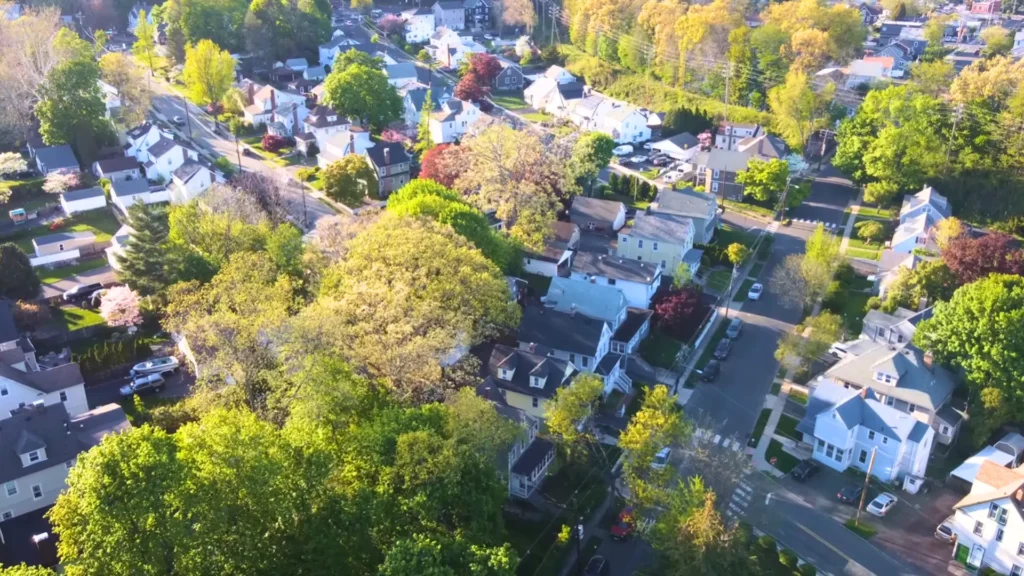
You have the down payment saved. You have the pre-approval letter. You are looking at a three-bedroom colonial in Essex County with a nice backyard.
Then you look at the NJ property taxes, and you panic.
That number stops people in their tracks. It feels like a second rent payment. It feels like a mistake.
It is not a mistake. New Jersey property taxes are the highest in the country. The average effective rate sits around 2.23%, and the average bill is over $10,000. In the towns most popular with New York City transplants, that number pushes past $14,000.
But the online calculators leave out a massive piece of the puzzle. Moving to New Jersey removes a different tax from your life. You are trading an income tax for a property tax.
You have to run the full math.
If you are still deciding which town to target, start with our master guide to the best NJ towns near NYC. If you are comparing specific commuter hubs, we have breakdowns for Hoboken vs. Jersey City and Maplewood vs. Montclair.
But before you fall in love with a house, you need to understand the tax reality. Here is the honest, unfiltered breakdown.
The Real Trade-Off: NYC Income Tax vs NJ Property Tax
When you live in New York City, you pay three layers of income tax. You pay the federal government. You pay New York State. And you pay the NYC resident income tax.
That city tax is a separate surcharge on your income. It ranges from 3.078% to 3.876% of your taxable income, depending on your bracket.
When you move to New Jersey, that specific city tax disappears. New Jersey has a state income tax, but it has no city income tax. None.
You are swapping a tax on your income for a tax on your house.
This is where the math gets interesting. Let’s use concrete examples.
Scenario 1: The High Earner
A household earning $250,000 a year in NYC pays roughly $7,700 to $9,600 just in city income tax, depending on deductions and filing status.
If they move to Montclair and buy a $600,000 home, the property tax rate is 2.87%. That bill is $17,220 a year.
They saved $9,600 in city tax but added a $17,220 property tax. Their total tax burden went up.
Scenario 2: The Moderate Earner Buying Modest
A household earning $120,000 a year in NYC pays roughly $3,700 to $4,600 in city income tax.
They move to a town in Bergen County and buy a $400,000 condo. The effective rate is 2.21%. That bill is $8,840 a year.
They saved $4,600 in city tax but added an $8,840 property tax. Their burden went up.
Scenario 3: The High Earner Buying Modest
A household earning $500,000 in NYC pays roughly $15,000 to $19,000 in city income tax.
They move to a cheaper town and buy a $400,000 home with a $9,000 tax bill.
They saved $19,000 in city tax but added a $9,000 property tax. They just kept $10,000 in their pocket every year.
The lesson is clear. The trade-off only works if you buy a house where the property tax bill is lower than the NYC income tax you are escaping.
For many people, it is a wash. They trade the city tax for the suburban tax and their monthly cash flow stays exactly the same. But they get a backyard and a driveway out of the deal.
Why Are Property Taxes So High in New Jersey?
If you are sitting at the closing table wondering why the bill is so high, the answer is rooted in local government structure.
New Jersey has 565 municipalities. It has over 600 school districts.
Each of these entities has to pay for its own infrastructure. The police, the fire department, the road maintenance, and the public schools all rely heavily on local property taxes to function.
The public school system is the biggest expense. On average, more than 50% of your property tax bill goes directly to the local school district.
New Jersey has some of the best public schools in the country. It also relies on local property taxes to fund them far more than other states do. When you pay a $15,000 tax bill, you are funding the teachers’ salaries, the new gymnasium, and the school buses.
That is why towns like Montclair, Maplewood, and Ridgewood have such high ratings on GreatSchools. The money comes directly from the homeowners.
You are paying for the school system whether you have kids or not.
There is a state cap on how much local governments can increase the tax levy each year (usually 2%). But the base bill is already so high that a 2% increase still hurts.
Town-by-Town Breakdown
It is hard to picture what a 2.5% tax rate actually means in dollars. Here are concrete examples from the keyword data for popular towns.
Montclair Property Tax Rate
Montclair sits in Essex County. The effective property tax rate sits around 2.87%. The average tax bill in Essex County is over $14,460.
If you buy a $700,000 house in Montclair, your annual bill will be roughly $20,090. You need to budget $1,674 a month just for taxes.
Princeton Property Tax Rate
Princeton sits in Mercer County. The effective rate is lower than Essex County, sitting around 2.23%.
If you buy a $700,000 house in Princeton, your annual bill will be roughly $15,610. You need to budget $1,300 a month just for taxes.
Jersey City and Hoboken
The waterfront cities are a different beast. The rates fluctuate heavily depending on the building. Many newer high-rises have “PILOT” (Payment In Lieu Of Taxes) agreements with the city.
A PILOT means the developer pays a fixed percentage of the building’s revenue to the city instead of traditional property taxes. This can lower the tax bill for the individual condo owner in the short term, but it makes the future unpredictable.
For older brownstones and walk-ups, you are paying the standard rate. Jersey City’s rate is roughly 1.48%, which is lower than the suburbs, but the property values are high.
If you are weighing these two cities, read our full breakdown of Hoboken vs. Jersey City to see how the tax structure affects your rent or mortgage.
The NJ Mansion Tax
If you are buying a home that costs $1 million or more, you have to pay the “mansion tax.”
This is a real estate transfer fee paid at closing. The rate is 1% of the sale price.
If you are buying a $3 million property, the NJ mansion tax 2025 rate for a $3 million property means you owe $30,000 to the state at closing. The seller usually pays this fee, but in a hot market, buyers sometimes agree to cover it to win the bid.
Keep this in mind if you are looking at premium towns like Ridgewood or Summit.
How to Lower Your NJ Property Tax Bill
You cannot change the rate. But you can change what you pay. Here is how to lower your bill legally.
1. The NJ Property Tax Deduction
If you file a New Jersey resident tax return, you can claim a deduction for property taxes paid on your primary residence.
For recent tax years, the deduction is $15,000. This is a direct write-off on your state income tax return. You can read the exact rules on the NJ Division of Taxation website.
2. Senior Freeze
If you are a senior citizen (65 or older) with limited income, you may qualify for the “Senior Freeze” program.
This program freezes your property tax bill so it does not increase as long as you remain eligible. It is a massive benefit for retirees on a fixed income.
3. Veteran Exemptions
If you are a veteran, you may qualify for an annual deduction on your property taxes. The amount varies depending on your service record and disability status.
4. Solar Installations
New Jersey offers a property tax exemption for solar installations. If you install solar panels on your home, they are exempt from property tax assessment.
This means your home’s assessed value does not go up when you add solar, but your energy bills go down.
5. The Appeal Process
This is the most overlooked tool. You can appeal your home’s assessed value.
If you believe the town has valued your home higher than it is actually worth, you can file an appeal with the county tax board. You have to do this by April 1st of the tax year.
You need evidence. Hire a local appraiser to provide a report showing recent comparable sales. If you win, the town lowers your assessed value, which lowers your tax bill.
When Are Property Taxes Due in NJ?
New Jersey property taxes are paid quarterly. The due dates are February 1, May 1, August 1, and November 1.
There is a grace period. You usually have until the 10th of the month to pay without a penalty.
If you have a mortgage, your lender will likely collect a portion of the tax every month through an escrow account and pay the bill for you. This makes it easier to budget, but your monthly payment will be higher than just the principal and interest.
Is It Worth It?
This is the question only you can answer. It comes down to your priorities.
For many families, the answer is yes. They trade the NYC income tax for a property tax bill. They get more space, a backyard, and a school system that is funded by the community.
For others, the numbers do not work. A $15,000 tax bill on a $600,000 house feels like a bad deal compared to a rent-stabilized apartment in Queens.
Run the numbers for your specific situation. Do not compare a NYC rent to a NJ mortgage. Compare the total cost of living in both places. That includes the income tax, the property tax, the commute, and the car.
If you are still in the research phase, go back to our pillar guide on NJ towns near NYC. If you have narrowed it down to Essex County’s two biggest hubs, check out Is Maplewood NJ a Good Place to Live?.
You can also use a tool like the NJ Property Tax Calculator to get a more precise estimate for a specific address.
FAQ
How much are property taxes in New Jersey?
The average effective property tax rate is around 2.23% to 2.88%. The average annual bill is over $10,000. In Essex and Bergen counties, bills over $13,000 are common.
Is it cheaper to live in NJ or NYC?
It depends on your income and the house you buy. You save on NYC income tax (3.078% to 3.876%) by moving to NJ. But you pay a high property tax bill. For high earners buying a modest home, NJ can be cheaper.
Why are property taxes so high in New Jersey?
Local property taxes fund public schools. New Jersey has some of the best schools in the country and relies heavily on local property taxes to pay for them, rather than state-level funding.
When are property taxes due in New Jersey?
Property taxes are due quarterly: February 1, May 1, August 1, and November 1. There is usually a 10-day grace period before penalties apply.
What is the NJ property tax deduction?
If you file a New Jersey resident tax return, you can deduct up to $15,000 of property taxes paid on your primary residence.
Can I lower my property taxes in NJ?
You can claim deductions for veterans, seniors, and solar installations. You can also appeal your home’s assessed value if you believe it is too high compared to recent comparable sales.
What is the NJ mansion tax?
It is a 1% transfer fee on homes sold for $1 million or more. It is paid at closing.
Are property taxes negotiable in NJ?
The tax rate is not negotiable. The assessed value of the home can be appealed. If you believe your home is over-assessed, you can file an appeal with your local tax assessor.
Does New Jersey have a property tax cap?
Yes. The state limits how much local governments can increase the tax levy each year, usually to 2%. However, this does not stop your specific bill from going up if your home’s assessment increases.
Do seniors get a property tax break in New Jersey?
Yes. The Senior Freeze program freezes property taxes for eligible seniors 65 and older who meet income requirements. There is also a $250 deduction for eligible seniors.
Are property taxes in NJ deductible on federal taxes?
Yes, but there is a cap. The SALT (State and Local Tax) deduction is currently capped at $10,000 for federal returns. If your property tax bill is $15,000, you can only deduct $10,000 on your federal return.
How do I appeal my property taxes in NJ?
You must file an appeal with the county board of taxation by April 1st. You need to provide evidence, such as a recent appraisal or comparable sales data, showing that your property is over-assessed.
What is an effective property tax rate?
It is the total amount of property tax paid divided by the property’s market value. It is a more accurate way to compare towns than just looking at the assessed value.
Do I need to pay property taxes if I rent in NJ?
No. The landlord pays the property tax. However, landlords factor that cost into your rent. Some towns offer a property tax deduction for renters on their state income tax returns.
What happens if I don’t pay my NJ property taxes?
The town can place a tax lien on your property. If the taxes remain unpaid, the lien can be sold to a third party, who can eventually foreclose on the home.
Is the NJ mansion tax paid by the buyer or seller?
Typically, the seller pays the mansion tax. However, in a competitive market, buyers sometimes agree to cover it during negotiations.
How often are property assessments done in NJ?
There is no fixed schedule. Towns are required to reassess properties periodically to ensure they reflect market value, but it can be decades between reassessments in some municipalities.
Can I fight a property tax increase in NJ?
You can appeal the assessed value if you believe it is incorrect. You cannot appeal the rate itself.
What is a PILOT program in NJ?
PILOT stands for Payment In Lieu Of Taxes. It is an agreement where a developer pays a fixed fee to the city instead of traditional property taxes. It is common for new construction in cities like Jersey City and Hoboken.
Are property taxes higher in North or South Jersey?
Generally, property taxes are higher in North Jersey (especially Essex and Bergen counties) because property values are higher and the demand for top-tier schools is greater.
Is it better to buy a cheaper house in an expensive town or an expensive house in a cheaper town?
Look at the dollar amount of the tax bill. A high rate on a cheap house can be more affordable than a low rate on an expensive house. Do the math on the specific properties you are considering.