
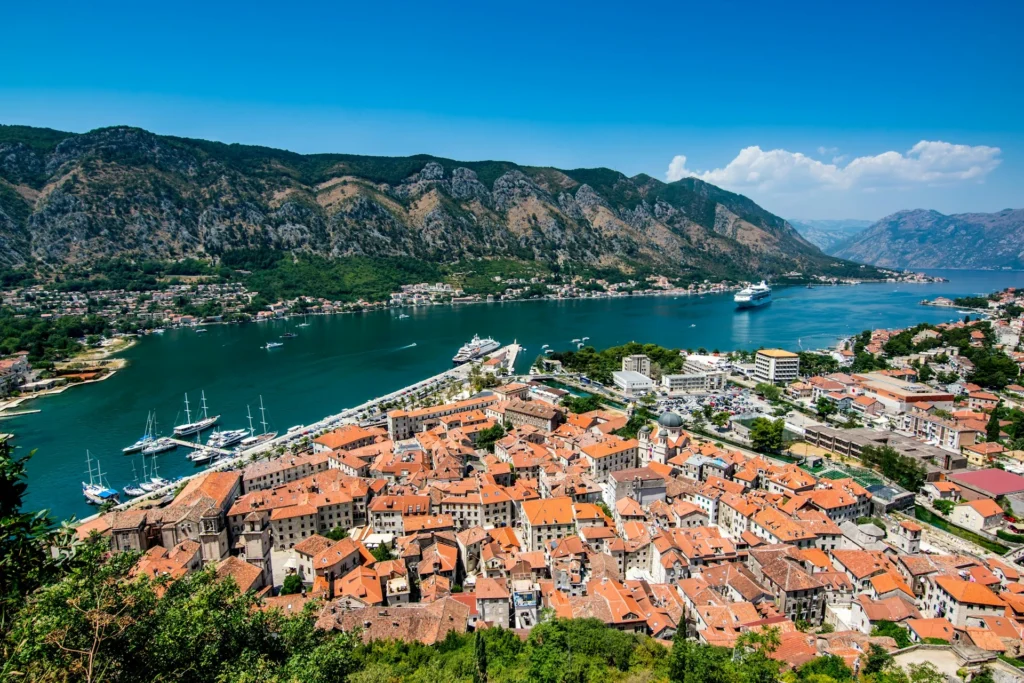
You have seen the photos. The massive limestone cliffs dropping straight into the deep blue water. The red-tiled roofs of the walled city sitting at the edge of the bay.
Kotor is the crown jewel of Montenegro. It is a UNESCO World Heritage site, a major cruise ship port, and a playground for hikers and sailors.
But it is easy to do Kotor wrong. If you just stay inside the Old Town walls and eat at the restaurants right next to the cruise terminal, you will miss the best parts. You will overpay for average food and you will never see the views that make this place famous.
Here are the 14 best things to do in Kotor, broken down with the exact details you need to plan your trip.
If you are trying to decide where to base yourself on the coast, you should read our comparison of Kotor vs. Herceg Novi first.
1. Hike the San Giovanni Fortress (The Main Event)
This is the reason you came to Kotor. The San Giovanni Fortress (also called the Castle of San Giovanni) sits 280 meters above the town. It is one of the best-preserved medieval fortifications in Europe.
The hike is brutal but short. You climb exactly 1,350 stone steps to reach the top.
Buying Tickets
You cannot start the hike from the Old Town without a ticket. The entrance is located right behind the Church of St. Nicholas, near the North Gate.
You pay the entrance fee at a small booth. As of 2026, the fee is around €15 per person. There are often people trying to sell you tours or drinks at the bottom. You do not need a guide for this. The path is clear.
The Trail
The first 20 minutes are the hardest. The steps are steep and uneven. You are walking up the ancient city walls.
Around step 500, you will reach the Chapel of Our Lady of Health. This is a small, ruined church with beautiful frescoes. It is a great place to stop, catch your breath, and take your first photos of the bay.
After the chapel, the stone steps turn into a rocky dirt path. It zigzags up the mountain. It is less steep here, but it requires more focus.
What to Wear and Bring
Do not do this hike in flip-flops. You need proper running shoes or hiking sandals.
Bring at least 1.5 liters of water per person. There is a small lady who sells water and snacks near the chapel during the summer, but do not rely on her. Bring your own.
The View
When you reach the top, the view is overwhelming. You get a 360-degree panorama of the Bay of Kotor, the town below, and the mountains stretching into Croatia.
Plan on spending about 30 minutes at the top taking photos and resting. The hike down takes about 30 minutes.
The Strategy: Start at 7:00 AM. The cruise ships dock at 9:00 AM. If you start early, you will hike up in the shade and have the fortress almost to yourself. If you start at 11:00 AM, you will be climbing in the blistering sun alongside 500 other people.
(If you want to stay close to the trailhead, compare hotels inside the Old Town using the map below).
2. Explore the Kotor Old Town (Stari Grad)
The Old Town is a triangular maze of squares, churches, and narrow alleys. It is surrounded by massive walls built by the Venetians.
You can spend hours just wandering without a map.
The Three Gates
The city has three main entrances. The Sea Gate is the main entrance from the cruise port. It has the famous stone carving of the winged lion of St. Mark. The North Gate is the entrance closest to the fortress hike. The South Gate is smaller and quieter.
St. Tryphon’s Cathedral
This is the most important building in the city. It was built in 1166 and has survived multiple devastating earthquakes. You can pay €3 to go inside.
The interior is a mix of Romanesque and Byzantine styles. The museum upstairs holds a collection of gold and silver relics. It is worth 20 minutes of your time to get out of the sun.
The Squares
The main square is Square of the Arms. This is where the Venetian military used to keep their weapons. Today, it is surrounded by cafes and bakeries.
The Strategy: The Old Town is an absolute madhouse between 10:00 AM and 4:00 PM when the cruise ship passengers are in town. Explore it early in the morning, or wait until the ships leave in the late afternoon. The alleys are magical at night when the day-trippers are gone.
3. Take a Speedboat to the Blue Cave
If you want to swim in water that looks radioactive, you need to go to the Blue Cave (Plava Špilja).
The cave is a natural phenomenon. Sunlight enters through a small hole and refracts off the sandy bottom, turning the water a brilliant, glowing neon blue.
How to Get There
You cannot drive to the Blue Cave. You have to go by boat.
Several operators run speedboat tours from Kotor harbor. The boats are small and fast, usually taking about 8 to 12 people. The ride to the cave takes about 30 to 40 minutes.
The tour will stop just outside the cave. You jump in and swim inside. The water is incredibly clear, and you can see the bottom about 20 meters down.
The Tour Route
Most tours last about 3 hours and cost between €30 and €40. They will typically stop at the Blue Cave for swimming, then head back to visit the submarine tunnels (built by the Yugoslav Navy in the 1960s) and the Our Lady of the Rocks island.
The Strategy: Do a morning tour. The wind picks up in the afternoon, making the water choppy and the boat ride bumpy. Also, morning tours beat the massive tour buses from Dubrovnik.
4. Visit Our Lady of the Rocks
This is a tiny, man-made island sitting in the middle of the bay, right off the coast of Perast.
Legend says that local sailors saw an image of the Virgin Mary on a rock in the sea. They started throwing rocks into the water, and eventually sank old ships to build an artificial island.
They built a church on the island. Today, you can take a short boat ride from Perast to explore it. The church is beautiful, and the attached museum is filled with silver and gold offerings from sailors who survived storms at sea.
You can take a boat from Perast to the island for about €5 per person. It takes 10 minutes each way.
5. Take a Day Trip to Perast
You don’t need to spend the night in Perast, but you cannot skip it. It is only 20 minutes up the coast from Kotor, and it feels like a completely different world.
Perast is a baroque village with a single, narrow street running along the water. It is lined with old stone palaces and restaurants.
There is nothing “to do” in Perast except walk along the water, drink coffee, and eat seafood. That is the point.
Getting There
You can take the local Blue Line bus from Kotor. It leaves from the main bus station and costs about €1.50. The bus ride is incredibly scenic.
You can also take a taxi, but expect to pay around €25.
The Strategy: Spend the morning in Kotor, then take the bus to Perast for lunch and a boat ride to the island. Walk the promenade and have a seafood dinner by the water.
6. Walk the Lower City Walls at Sunset
Everyone hikes to the top of San Giovanni. But there is a lower section of the walls that doesn’t require a ticket.
From the North Gate, you can follow a path up the switchbacks for about 15 minutes without paying the national park fee.
You can’t reach the top, but you get high enough to look down on the red roofs of the Old Town and see the sunset over the mountains.
It is a beautiful, free alternative if you are tired and don’t want to do the full 1,350-step hike.
7. Explore the Maritime Museum
If you are looking for something to do in the middle of the day when it is too hot to walk, go to the Maritime Museum.
It is housed in a beautiful 18th-century palace in the Old Town. The museum tells the story of Boka Kotorska (the Bay of Kotor) and its centuries-old relationship with the sea.
You learn about the famous naval captains, the shipbuilding tradition, and the battles fought in the Adriatic.
It is small, quiet, and air-conditioned. It costs about €5 to enter.
8. Visit the Cats Museum
Kotor has a massive stray cat population. The cats are well-fed and cared for by the locals. They are basically the unofficial mascots of the city.
The Cats Museum is a small, quirky museum dedicated to these animals. It is filled with cat paintings, postcards, and trinkets.
It’s not a world-class museum, but it is a fun way to spend 30 minutes. The proceeds go toward feeding the strays.
9. Relax at Kotor Beach (or Nearby Dobrota)
Kotor doesn’t have a massive sandy beach. The shoreline directly in front of the town is mostly concrete platforms and small rocky coves.
If you want a proper swim, walk 20 minutes north to Dobrota. The waterfront there has better swimming spots, concrete platforms, and quieter sunbathing areas.
The water is incredibly clean and clear. You can also find plenty of cafes right on the water for lunch.
If you want a sandy beach, you need to drive to Jaz Beach (about 30 minutes away) or take a boat to Žanjice on the Luštica Peninsula.
(If you want a hotel with direct water access, Dobrota is the best area. Compare prices on the map below).
10. Eat Kotorska Pašta
You have to try the local food.
The most famous dish in Kotor is Kotorska Pašta. It is a small, tube-shaped pastry filled with cream and almonds, baked and covered in powdered sugar. It is sweet, rich, and absolutely incredible.
You can find it in almost any bakery in the Old Town.
For lunch or dinner, look for black risotto (made with cuttlefish ink) or fresh mussels. The seafood is incredibly fresh because it comes straight out of the bay.
11. Climb the Ladder of Kotor
If you want a harder hike than the fortress, look for the Ladder of Kotor (Kotorske Ljestve).
It is an old mule trail that zigzags up the mountain behind the fortress. It goes even higher than San Giovanni.
You don’t need a ticket to hike the Ladder, but it takes about 3 to 4 hours to reach the top. The views are spectacular, but it is a serious hike. Bring a lot of water, wear proper shoes, and check the weather before you go.
12. Take a Free Walking Tour
If you want to understand the history without reading a guidebook, take a walking tour.
There are several operators that run daily tours through the Old Town. They operate on a “pay what you want” basis. You learn about the Venetian architecture, the earthquakes, and the local legends.
It is a great way to orient yourself on your first day. It takes about 1.5 hours. You can check reviews and book spots on sites like GuruWalk or Freetour.com.
13. Explore the Churches
Kotor is packed with churches. It is a mix of Catholic and Orthodox traditions because of its history.
The Church of St. Nicholas is the main Serbian Orthodox church. It has beautiful golden icons and a peaceful courtyard.
The St. Tryphon’s Cathedral is the main Catholic church. It is one of the oldest cathedrals in the Adriatic, built in 1166. You can pay a small fee to go inside and see the relics and the art.
You can read more about the history of these buildings on the official Montenegro Travel website.
14. Drive the P1 Highway (For the Views)
If you have a car, you need to drive the P1 highway. It is the road that goes up the mountain behind Kotor.
It has 25 hairpin turns. It was built by the Austro-Hungarians in the 19th century.
The views of the bay from the road are some of the best in Europe. There are several pull-off areas where you can stop and take photos.
It takes about 45 minutes to drive to the top. Be careful, the road is narrow and there are no guardrails in some places.
Getting Around Kotor
The Old Town is entirely pedestrian. You cannot drive inside the walls.
If you stay in the Old Town, you don’t need a car. You can walk to the fortress, the harbor, and the bus station.
If you stay in Dobrota or further out, you might want a car for exploring the bay and the mountains. Parking is scarce, so make sure your hotel offers a parking space.
The Best Time to Visit
The summer (July and August) is incredibly hot and crowded. The cruise ships bring thousands of people to the Old Town every day.
May, June, and September are the best months. The weather is warm, the water is swimmable, and the crowds are thinner.
Winter is quiet. Many restaurants close, but the scenery is still beautiful and the hiking is great.
Conclusion
Kotor is a city that rewards effort. You can sit in a cafe and look at the mountains, but you get the real experience when you climb the walls, swim in the caves, and eat the local pastry.
If you are still deciding where to base yourself, read our full comparison of Kotor vs. Herceg Novi.
And if you are traveling across the rest of the country, check out our guide on how to get from Belgrade to Novi Sad.
FAQ
Is Kotor worth visiting?
Yes. The combination of the dramatic mountains, the historic Old Town, and the bay makes it one of the most unique places in Europe. It is a UNESCO World Heritage site.
How many days do you need in Kotor?
Two days is perfect. That gives you time for the fortress hike, a boat tour to the Blue Cave, and a relaxed evening in the Old Town. If you want to do day trips to Perast and the beaches, give it three days.
Is the San Giovanni hike hard?
It is a steep climb of 1,350 steps. It takes about 45 minutes to an hour to reach the top. It is doable for most fitness levels, but take your time, wear good shoes, and bring water.
What is the best time to visit Kotor?
May, June, or September. July and August are extremely hot and crowded.
How much does the Blue Cave tour cost?
Most tours cost between €30 and €40 for a 3-hour trip. This usually includes a stop at the submarine tunnels and Our Lady of the Rocks.
Can you swim in Kotor?
Yes. There are small rocky beaches near the town, but the best swimming is in Dobrota or the Blue Cave.
Is Kotor expensive?
It is more expensive than the rest of Montenegro, but still cheaper than Croatia or Italy. Expect to pay around €15 to €20 for a good meal in the Old Town.
Where should I stay in Kotor?
If you want to be close to the action, stay inside the Old Town. If you want a quieter spot with better swimming, stay in Dobrota. If you have a car, look at Muo or Prčanj.
Is Kotor safe?
Yes, it is very safe. It is a small, tourist-friendly town. Just be careful when walking on the steep stairs in the Old Town after it rains.
Do you need a car in Kotor?
No. You can walk everywhere in the Old Town, and you can take the bus to Perast or rent a boat to see the bay. If you want to explore the mountains or the beaches outside the bay, a car is helpful.
What is the best view in Kotor?
The view from the San Giovanni Fortress is the most famous. The view from the road near the P1 highway (above the town) is also incredible if you have a car.
Is there a beach in Kotor?
Not a sandy one. The waterfront has concrete platforms and pebble areas. For sand, you need to drive to Jaz Beach.
What is the local food in Kotor?
Try the Kotorska Pašta (a sweet pastry) and the black risotto (made with cuttlefish ink).
Can I do the hike to San Giovanni with kids?
It is tough for young kids. Older kids who are used to hiking will be fine.
How do I get to the Blue Cave?
You have to take a boat tour from Kotor or Herceg Novi. There is no road access.
What if it rains in Kotor?
The Old Town is still beautiful in the rain. You can visit the museums, the churches, or sit in a cafe. The fortress hike is dangerous in the rain because the stones get slippery.
Do I need cash in Kotor?
Yes. Many small shops, bakeries, and the fortress ticket booth are cash-only. There are ATMs in the Old Town, but they charge high fees. Bring some Euros with you.
Is the Old Town accessible for wheelchairs?
Not really. The streets are cobblestone and there are many stairs. The main square (Square of the Arms) is flat, but exploring the alleys is difficult.
Can I visit Kotor from Dubrovnik?
Yes. It is a popular day trip, but the border crossing can take a long time in the summer. It is better to stay overnight if you can.
What is the currency in Montenegro?
The Euro (€), even though the country is not in the EU.